
Large Language Models: Advancing Foundations, Safety, and Emerging Capabilities
Session Organizers

Prof. Dr. Booncharoen Sirinaovakul
Lecturer, Department of Computer Engineering, King Mongkut’s University of Technology Thonburi, Thailand

Asst. Prof. Dr. Nuttanart Muansuwan
Lecturer, Department of Computer Engineering, King Mongkut’s University of Technology Thonburi, Thailand
Description
This special session invites high-quality research contributions as well as work that demonstrates substantive conceptual or technical innovation across the full spectrum of Large Language Models (LLMs). We seek submissions addressing foundational advances in model architecture, training efficiency, and fine-tuning techniques (e.g., LoRA, QLoRA) for specialization and adaptation. We are also interested in scalable deployment methods, such as Retrieval-Augmented Generation (RAG). Equally critical are papers focusing on safety and ethical considerations, including security (e.g., prompt injection), alignment, interpretability, and bias mitigation. Finally, we welcome innovative work on emerging capabilities such as complex reasoning, multi-agent systems, and the development of next-generation multimodal LLMs.
Enjoyable Collaborative Work
Session Organizers

Mondheera “Ampere” Pituxcoosuvarn
Lecturer, College of Information Science & Engineering, Ritsumeikan University, Japan

Ryosuke “Leo” Yamanishi Professor, Faculty of Informatics, Kansai University, Japan
Description
As collaboration becomes increasingly digital and distributed, there is a growing need for systems that make teamwork not only effective but also smooth, engaging, and satisfying. Enjoyable collaboration does not always mean playful or game-like; it also includes experiences where communication flows naturally, cognitive load is reduced, conflicts are easier to resolve, and participants feel supported, understood, and motivated. This special session explores technologies, methods, and designs that promote these positive collaborative experiences.
We welcome research on both human–human and human–AI collaboration, including systems that support coordination, shared understanding, emotional awareness, and adaptive assistance. Gamification and playful elements are welcome but not required; equally valuable are approaches that enhance enjoyment through clarity, reduced friction, intelligent mediation, or improved interaction flow. Work on collaborative learning is also encouraged, particularly studies showing how AI and interaction design can help learners work together more smoothly and meaningfully.
Topics of interest include enjoyable or low-friction group work, AI-supported collaboration, interaction cues for engagement, design for smooth communication, facilitation technologies, collaborative learning environments, and computational approaches to modeling collaborative dynamics. By uniting perspectives from AI, HCI, entertainment computing, and learning sciences, this session aims to advance the design of collaborative systems that people not only use successfully, but genuinely experience as positive and enjoyable.
Intelligent Systems and Emerging Data Technologies
Session Organizers

Sansiri Tarnpradab
Lecturer, Department of Computer Engineering, King Mongkut’s University of Technology Thonburi, Thailand

Kien Hua
Professor, Department of Computer Science, University of Central Florida, USA
Description
The rapid growth of data across diverse domains has created an increasing demand for intelligent systems capable of extracting meaningful insights, supporting informed decision-making, and addressing complex real-world problems. Advances in artificial intelligence, machine learning, and data technologies play a critical role in enabling scalable, adaptive, and robust solutions in data-intensive environments. This special session highlights the significance of intelligent systems and emerging data technologies as key drivers of innovation in both academic research and practical applications.
This session welcomes original research papers and practical contributions related to the design, development, and application of intelligent systems and modern data technologies. Topics of interest include, but are not limited to, intelligent data analytics, machine learning and deep learning, natural language processing, computer vision, recommender systems, knowledge-based and graph-based systems, multimodal data integration, big data platforms, and data-driven decision support systems. Contributions addressing issues such as scalability, efficiency, interpretability, robustness, and responsible AI are also encouraged.
By bringing together researchers, practitioners, and industry experts, this special session aims to foster interdisciplinary discussion, promote the exchange of ideas and experiences, and explore emerging trends and future research directions at the intersection of intelligent systems and data technologies, with particular emphasis on approaches that bridge intelligent models and data-centric system design.
AIoT Systems: IoT Intelligence and Smart Applications
Session Organizers
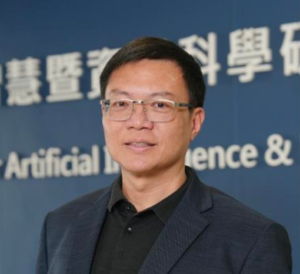
Prof. Dr. Kevin Fong-Rey Liu
Provost Professor, Department of Safety, Health, and Environmental Engineering, Ming Chi University of Technology, Taiwan
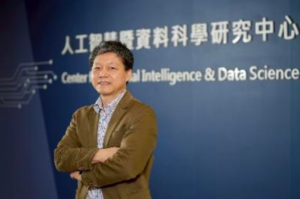
Prof. Dr. Yen-Jen Chen
Director, Center for Artificial Intelligence and Data Science Associate Professor, Department of Electronic Engineering, Ming Chi University of Technology, Taiwan
Description
This special session focuses on recent research advances and practical innovations in Artificial Intelligence of Things (AIoT), spanning system architectures, algorithms, and realworld deployments that integrate artificial intelligence with Internet of Things (IoT) infrastructures. We seek contributions addressing foundational and applied aspects of AIoT, including edge intelligence, data-driven analytics, distributed and federated learning, and scalable edge–cloud coordination. Of particular interest are works that demonstrate effective integration of machine learning techniques within sensor-rich, cyber-physical environments under real-world constraints such as latency, energy efficiency, reliability, and security. The session also welcomes studies exploring the role of Large Language Models (LLMs) as reasoning, interaction, or decision-support components embedded in AioT systems. Emphasis is placed on experimental validation, system-level evaluation, and realworld deployments across domains such as smart cities, industrial systems, transportation, energy, and data-driven operations and services.